




Discover the difference between these two types of interest.
Understanding how interest works can transform your financial future. Whether you're saving for a dream vacation, building an emergency fund, or planning for a fulfilling retirement, having an interest in interest (pun intended) can help you make smarter decisions with your money.
So what is the difference between simple and compound interest? By the end of this article, you'll understand what sets simple vs compound interest apart, how each type affects your financial growth, and which one can help you reach your goals faster.
What is simple interest?
This is the most straightforward way to calculate interest. With simple interest, you earn a fixed percentage only on your original principal amount, and that's it. In other words, what you earn stays the same throughout the entire period. Simple interest is most commonly found with auto loans, personal loans, and short-term savings certificates. Here’s the formula to calculate simple interest:
Simple Interest = Principal × Rate × Time
For example, if you deposit $1,000 in a savings account with a 5% annual rate, you'll earn $50 every year. After five years, you'll have earned $250 in total interest, giving you $1,250.
What is compound interest?
This is where the magic happens for your savings! With compound interest, you earn not just on your original principal, but also on the interest you've already earned. This creates a snowball effect that can significantly boost your savings over time. Calculating this can be a little more tricky, but we made it easy with our Savings Interest Calculator.
Using the same example, if you deposit $1,000 in a savings account with a 5% annual compound interest rate, you'll earn $50 in the first year. But in the second year, you earn interest on $1,050, not just your original amount.
After five years with compound interest, you'd have approximately $1,276 — that's $26 more than simple interest, and the gap only widens over time!
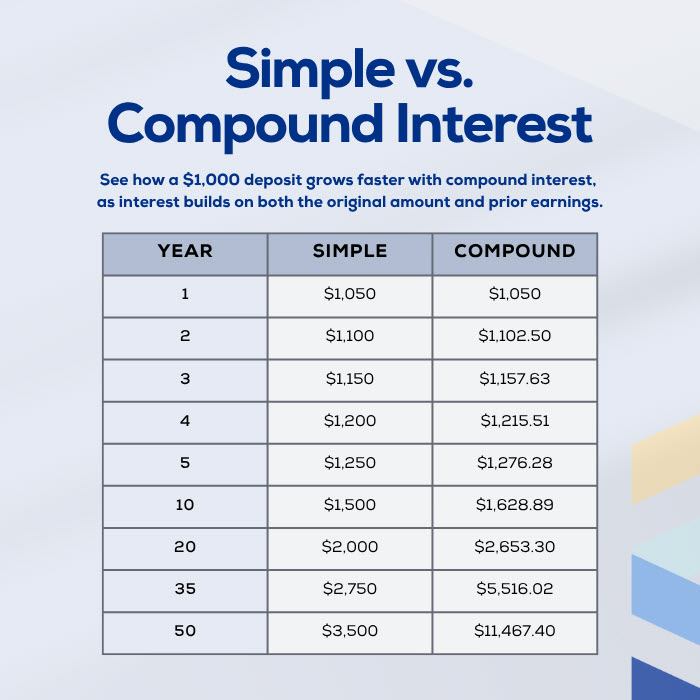
Simple vs compound interest: which benefits you more?
When comparing simple vs compound interest, the benefits of compounding become clear, especially over longer periods. While simple offers predictability, compound provides exponential growth.
This difference means compound interest is often a better choice for long-term savings goals like retirement, education funds, or building wealth over time. Here are practical ways to harness its power:
- Start early: Even small amounts can grow significantly over time. Beginning with $25 or $50 monthly is better than waiting until you can save more.
- Choose the right accounts: Look for high-yield savings accounts, money market accounts, or investment accounts.
- Reinvest your earnings: Instead of withdrawing interest payments, elect to reinvest them! Retirement vehicles like a 401k or IRA often have the option to let you reinvest your dividends, which contributes to the power of compounding.
- Be consistent: Regular contributions, even small ones, can dramatically increase your earnings.
So, what is the difference between simple and compound interest? It all comes down to how your money grows. While simple interest has its place in certain financial products, compound interest is your ally for long-term wealth building.
Remember, every financial journey begins with a single step. Whether you're just starting to save or looking to optimize your current strategy, understanding simple vs compound interest is key to making smarter financial decisions. Start where you are, with what you have, and let time work in your favor.